This week’s Green Scene column in Crain’s Chicago Business: Evanston architect gets kudos for first North Shore LEED Platinum house


The Glencoe house

Nate Kipnis isn’t the sort of architect who builds eco-friendly houses for the sake of bragging about the latest green bells and whistles he’s added.

In fact, he makes a bigger deal about employing ancient energy-efficient design techniques, such as slanting roofs and overhangs and positioning windows to maximize a home’s access to the sun’s passive energy. Mr. Kipnis, 50, principal of Kipnis Architecture & Planning in Evanston, sometimes persuades clients not to adopt some systems, such as geothermal. He argues they’re not always worth the upfront investment.


Nate Kipnis

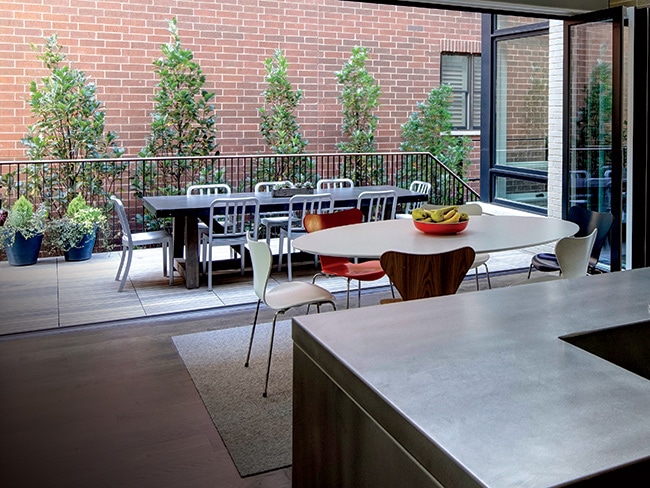
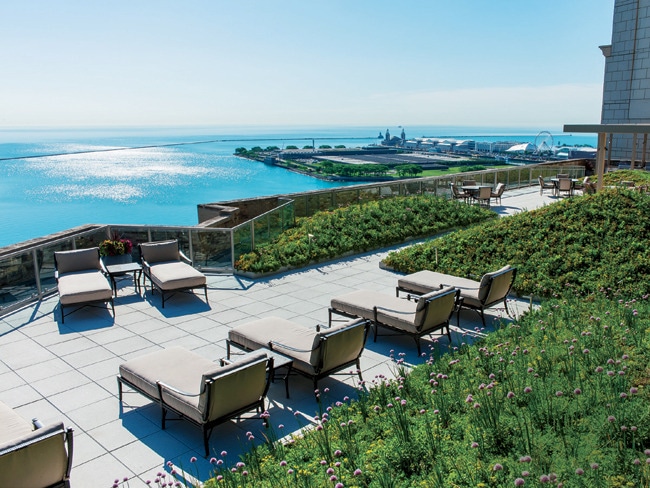
So at first blush, it may have surprised some to learn he was getting accolades late last month for designing only the second new home in Illinois that was awarded the U.S. Green Building Council’s LEED Platinum certification, the highest level possible. (The first one is on Chicago’s North Side.) But the home, on a corner lot in Glencoe, received that designation because of the extensive green features adopted, both tried and true, as well as newer technologies. They included a green roof, natural daylight, radiant floor heating, LED recessed lighting, a compact plumbing core design and passive whole-house ventilation. (LEED is short for Leadership in Energy and Environmental Design.)

Mr. Kipnis is involved in many green initiatives in Evanston beyond his primary craft of designing and building eco-friendly homes.

He’s one of the founders of Citizens’ Greener Evanston (which was originally the Network for Evanston’s Future), and he came up with the idea for the Evanston Offshore Wind Farm in 2007. The 200-megawatt project calls for 40 turbines that would be located seven to nine miles east of Northwestern University on Lake Michigan. The initiative is popular among many Evanston residents who want to be less reliant on fossil fuels, but it has its opponents, too.

Regardless of local opinions, progress is stalled in part because of developments in Washington. The federal Production Tax Credit for wind, which would have been instrumental in helping finance the offshore endeavor, is set to expire at yearend, and efforts to extend it face an uncertain future in Congress.

In the wake of his Glencoe project’s LEED recognition, Crain’s met with Mr. Kipnis to learn more about the home and other green efforts he’s pursuing.

Crain’s: You’ve been building green homes for a long time. Was it important for you to finally design one that was awarded LEED Platinum certification?

Mr. Kipnis: I studied architecture with an environmental concentration in the 1980′s, so I’ve been hardwired forever to design green homes. I don’t typically design the super-expensive homes, and it takes money to do a LEED home; extra dollars have to be spent on certification and other things.


Inside the Glencoe house

In this case, the client was pushing for it. He had seen the Al Gore movie (“An Inconvenient Truth”), and it blew his mind. He came to me and said he wanted to do a LEED home. He didn’t want to just say he had a green home. We built him a house that was priced at the Glencoe market rate, but we didn’t give him a crazy home theater or over-the-top cabinets, even though he got a really nice kitchen.

You don’t really know it’s a green house until you start to learn about it. The more you learn, the better the story gets. We’ve had about 1,000 people go through the home during several open houses we’ve been asked to have (by the U.S. Green Building Council to promote more green homes and LEED certification).

Crain’s: Why have there been so few LEED constructions for new homes in Illinois?

Mr. Kipnis: That’s a great question. I’m not sure about this. The USGBC publishes lists of how many homes have been LEED-certified at different levels in various states.

States such as California, Texas, Hawaii, New Mexico, Pennsylvania, Washington and Colorado have a tremendous amount of LEED homes, and have most of the Platinum level ones. It might be that Chicago is a “mature” city and as such there are fewer new homes built here than out West. I’m not sure about that, but it might be true.

Crain’s: I know you’re keen on getting the offshore wind farm approved. How much energy can it potentially generate for Evanston residents and businesses?

Mr. Kipnis: The power production depends to a very large degree on the actual wind speed out at the turbine locations. We feel that it is very likely that the wind speed will be on average around 17-18 mph, and possibly more. Wind power goes to the cube of wind speed, so a little increase in wind speed is a very large increase in power.

At 18 mph, the 40 turbines would produce about 15.8 gigawatts of power, which would offset about 59,000 homes. Evanston, for reference, has about 30,000 homes. The CO2 reduction would be equal to about 490,000 tons of CO2. This is 350 percent of the Evanston Climate Action Plan target. The numbers at 20 mph wind are way higher.

Crain’s: Are you hopeful the offshore wind farm will eventually get built near Evanston?

Mr. Kipnis: Yes, but it will probably be built many years down the line. In the meantime, two members of the CGE’s renewable-energy task force met with (Illinois) Rep. Robyn Gabel and then (Illinois) Sen. Jeff Schoenberg. They crafted bills that would establish a board made up of representatives from various interest groups to lay out how an offshore wind farm would be permitted and the steps that would be involved.

The bills went through and the governor signed it, which established the Illinois State Lake Michigan Offshore Wind Energy Advisory Board. The board is currently moving towards finishing their work, probably in the next month or so.

It would be great if we could make our own energy and create our own jobs here to support the project. If that federal tax credit is cut, it will kill so many jobs, and all because of the politics of climate change. We can’t keep using limited fossil fuels. We continue to use it at our own peril.

Crain’s: What other environmental efforts are you and CGE working on?

Mr. Kipnis: Our group is working on a community aggregation initiative to lower electricity rates in Evanston. Power is deregulated in Illinois so you can use any provider you want. When you get a community together, you can negotiate the best rates, and you can choose the source of your power. About 22 communities in Illinois have already done this. Oak Park went 100 percent green power and residents there have been saving close to 25 percent on energy costs.

The Evanston initiative is on the March 20 ballot. If it passes, it will authorize the city to move forward with negotiations and we could have it up and running by the summer. We’d love to have 100 percent green power, but no matter what, this will help Evanston lower its carbon dioxide footprint. We won’t know the actual dollar savings until we go and lock in rates in the market.

We’re getting a website up now to make sure everyone is educated. Our goal is to get the highest percentage of people in Evanston to be in favor of this community aggregation initiative — please tell me who would prefer more expensive, dirty power? If we can have a mandate here, it puts some emphasis behind other things we want to work on and it will give us great momentum.

Posted in Green Scene | Leave a comment

This week’s Green Scene column in Crain’s Chicago Business: Tenants finally stream into Green Exchange


The long-awaited Green Exchange is finally buzzing as more eco-minded businesses started moving in just after the new year.

You’ve probably seen it hundreds of times from the Kennedy Expressway, jutting out to the east on Diversey Avenue. The rehab project of the old Cooper Lamp Factory was announced with much fanfare about five years ago as the anticipated largest hub of green businesses under one roof anywhere in the country. Baum Development, which purchased the 272,000-square-foot historic landmark building, quickly hoisted a massive Green Exchange sign atop the structure. Baum went to work on a major conversion, with plans to add many green and energy efficient features to the structure as well.

The project was moving forward until the fall of 2008, when the financial markets crashed and Baum found itself without a lender for the rehab, according to David Baum, co-developer of the exchange. He recounts that money for construction dried up and he struggled for the next two years to cobble together financing to keep the renovation afloat.

“It was an extremely stressful time for us, just like everyone else,” he recalls.

By the end of 2009, Baum closed on a construction loan for the Green Exchange. Mr. Baum says he has lots of his own equity tied up in the building too, but won’t say how much.

Since then, Baum Development signed Coyote Logistics, a transportation logistics firm, as the anchor tenant, and proceeded to attract more businesses to fill up more than 85% of the exchange. The quiet space of the cavernous building was finally pierced last June when Coyote Logistics moved in and took over the entire third floor and part of the fourth floor. GreenChoice Bank moved in late last summer.

The most recent tenants who opened shop there over the last few weeks include 2 Point Perspective, an architectural firm that specializes in green design, Pivotal Production, a social media and green event planning company, and Purple Asparagus, a nonprofit that educates children and families about healthy, local food. Greenhouse Loft, an eco-friendly event space, and others moved in last fall.

Aside from the workers’ private offices, there is lots of room for communal gathering. There will be conference rooms for sharing. A rooftop deck will support an outdoor public area, a green roof, an organic vegetable garden, and a bee co-op for producing honey. And there are plans for a restaurant that will be headed by a well-known Chicago chef. Mr. Baum says that announcement is forthcoming in the next few weeks.

Crain’s met with him this week to learn more about the Green Exchange.

Crain’s: What was your original vision for the Green Exchange?


David Baum

Mr. Baum: Five years ago, we saw there were people starting green businesses but everyone was operating on their own. we thought if we could aggregate these folks and they could share resources, they could be more successful in a collective environment.

We thought they could benefit from certain economies of scale, like shared conference rooms, an event space, a speakers forum, and a website. And then there’s a more abstract idea about shared referrals. We’ve created a community of like-minded tenants that can help one another.

Did you consider constructing a new LEED-certified building with all the latest green bells and whistles?

Mr. Baum: I’m a fan of LEED (Leadership in Energy and Environmental Design) and LEED standards (by the U.S. Green Building Council), but the greenest building you can build is the one you don’t knock down. To work with something that already exists was a very sustainable way to go.

Crain’s: Can you list some of the greenest features in the Green Exchange building (aside from the tenants)?

Mr. Baum: We have a 41,000-gallon rain cistern on the roof that will collect rain water and pump it through the building for our plant garden, our green roof and an organic working garden. We’re working with the Chicago Honey Co-op to have a beehive for honey on our roof. We’ll be growing some of our own food with WeFarm America that will be watered with recycled water and used at the restaurant. Leftover food from the restaurant will be used as compost for our gardens. It’s all very symbiotic.

We have an escalator that uses 30% less energy than regular ones. We have recycled wood in the building from barns, tiles that are recycled from aluminum cans. We even have a fantastic piece of art work by a Chicago artist made from 1,500 washers. We’ll also have electric charging stations in our parking lot and I-Go Car Sharing will be there too.

Crain’s: Did your tenants have to pass some “greenness” test to qualify for a spot in the building?

Mr. Baum: We’re not the green police. We went to Delta Institute to be the arbiters of green, but only used them once. The people we get are so mission-focused that there was never really an issue about whether they’re green. If you’re greenwashing, you don’t want to be here.

Crain’s: It’s ironic that such a green-focused building isn’t really conveniently located to great public transportation. How are you addressing that problem?

Mr. Baum: We agree, but there are ways to improve it. There is a bus route that stops in front of the building. We also run a shuttle during rush hour that picks up at the Metra, and at the blue line and red line el stops nearby. It’s not a hybrid shuttle bus, but at least it keeps people out of their cars.

We also have a bike room that holds 100 bikes, and a shower room, too.

Crain’s: Is there a model for this type of green business hub in other cities?

Mr. Baum: The closest thing to it I’ve seen is the Jean Vollum Natural Capital Center in Portland, Ore. But it’s only 65,000 square feet. There’s nothing in the country on the scale of the Green Exchange.

Posted in Green Scene | Leave a comment

This week’s Green Scene column in Crain’s Chicago Business: Green Delete wipes data from hard drives for safer IT recycling


Green Delete Inc. picked a pretty good time to hang out its shingle. The Chicago-based firm, which has been open a year, helps other companies erase data on computer hard drives and servers before they get rid of the equipment.

In January, Illinois joined at least 30 other states in enacting stringent new rules on the disposal of electronic equipment. Companies also must erase data on disposed computer hard drives to ensure privacy protection or face tough fines.

That means many more computers are likely to be recycled and reused instead of being hauled to landfills. And the law is intended to ensure private information isn’t passed along and shared with outside parties. Software programs that wipe out data on hard drives aren’t foolproof: Anyone with basic data-retrieval skills can extract information from a hard drive that has been scrubbed with one of those programs, warns Marilyn Slavin, Green Delete’s founder and CEO.

Green Delete is the first U.S. company that’s certified by the National Association for Information Destruction to perform onsite data eradication for clients. Green Delete ensures that any information it cleans out from computers and servers is gone for good.

An added bonus: Once a hard drive is completely sanitized, it can be resold.

Ms. Slavin, 48, has worked in the information technology industry for 25 years, spending most of that time selling and implementing Microsoft solutions for large corporations. For about 15 years at Microsoft, she worked often with Greg Reuter, another Green Delete co-founder and its chief technology officer.

She declined to provide revenues but said the company is projecting 30 percent sales growth in its second fiscal year, beginning this month. Some of that expansion is likely to come from new partnerships with national electronics outfits that recycle computers and resell them. In addition, Green Delete is partnering with IT consulting firms to help companies ensure their data is secure and private.

The company so far is working with eight large-scale customers, including a few national financial services entities and two universities.

Green Delete has 10 trained technicians on staff and has access to at least 20 more such specialists when demand grows for its services. The company is already garnering interest overseas, especially in London, where even stricter laws mandate data scrubbing from hard drives before companies can unload their IT equipment, she says.

If you think data eradication isn’t much of a problem, consider the headline on a news story published in PC Pro Magazine in December 2010: “NASA Sells Off PCs with Secret Shuttle Data”. Apparently, the Office of the Inspector General found that some very smart folks at NASA had neglected to properly erase potentially classified data from close to a dozen computers used in the Space Shuttle program before they were sold to local second-hand computer shops in the Cape Kennedy area.

(For an even more recent — and nearby — example, check out this headline from ChicagoBusiness.com this week: “Tablet snafu: Motorola says not all data wiped from refurbished devices.”)

Crain’s met with Ms. Slavin recently to learn more about how Green Delete helps clients avoid the same kind of mishap.

Crain’s: How did you get the idea for this company?

Ms. Slavin: At Microsoft, we worked on rolling out large solutions to global companies, but I didn’t know what they were doing with all this old equipment. We started to see that most of them didn’t have a plan, or the plan was to throw them to a recycler and hope for the best.


Slavin

In some cases, companies did software swiping, which takes it down to the operating level, but anyone with an IT background can get to this data, so it’s not really secure. When I go to privacy conferences, the experts there say this type of data breach is a problem and that data can be stolen. We saw a problem and decided to solve it.

Crain’s: What’s so unique about your data eradication services that companies couldn’t do on their own?

Ms. Slavin: Our biggest selling point is that we can do it a lot faster than other services. We do it onsite, so it’s done before the equipment leaves the company. We bring their equipment in another room, we pull out the hard drive and can do 30 to 60 computers at a time. It happens off the network so there’s no interruption in the operation of the business.

Companies are now realizing they have to budget for data eradication, but chief security officers are seeing they can get a return on investment for data eradication because they can resell their hard drives in a secondary market and get about a third of their costs back.

Crain’s: What else do you offer companies aside from cleaning out their data?

Ms. Slavin: We have asset management services that help companies save lots of money, too. For example, we can pull the licensing keys off the hard drives when we’re doing the eradication so they can be saved and reused in other hard drives. A licensing key comes with every piece of software, which enables anyone to download that software once again in a new system. We’ve saved companies $10,000 to $15,000 just by doing that.

Crain’s: What’s the green connection to the services you provide?

Ms. Slavin: Our service doesn’t break the hard drive and it can be reused, while others shred the hard drive. We hook companies up with the recyclers and we only work with certified e-Stewards recyclers because we know they’re recycling responsibly.

We also educate companies about why they should consider donating or selling their hard drives once our work is done. There’s lots of harmful chemicals in hard drives if they’re opened and you don’t want them in landfills because they might leach into the water supply. That’s one of the reasons all these states have anti-dumping laws.

Posted in Green Scene | Leave a comment

This week’s Green Scene column in Crain’s Chicago Business: New study finds ‘cluster activity’ in green economy can accelerate success

A new study on opportunities in the local green economy offers perspective on how entrepreneurs, existing businesses and investors can target their efforts to succeed.

Using “cluster analysis,” the study’s authors demonstrate how specific sectors within the green economy can work together to achieve synergies and build momentum that’s more powerful than solo efforts by individual companies or investors. Details of the study’s findings and a broader discussion about how to boost greater activity in the business community and economic development circles will be featured tonight at the University of Chicago’s Gleacher Center downtown, says Robert Weissbourd, one of the co-authors and president of economic development consultancy RW Ventures LLC. He’s one of the scheduled panelists, along with John Cleveland, vice president of Innovation Network for Communities, another co-author of the study.

The lecture is co-sponsored by the nonprofit Delta Institute and the University of Chicago’s Graham School. Other panelists include Sabina Shaikh, an environmental economist and faculty member of the University of Chicago, and Michael Berkshire, green projects supervisor for the city of Chicago’s Department of Housing and Economic Development. The panel will be moderated by Jean Pogge, the Delta Institute’s CEO.

Mr. Weissbourd says Chicago’s current challenge is to convert existing pockets of green startup activity into development that cuts across a wider swath of the economy.

The study was commissioned by Metropolis Strategies, which was formerly Chicago Metropolis 2020, the civic leadership supporting organization of The Chicago Community Trust.

Crain’s met with Mr. Weissbourd to discuss the study’s findings and how they can be applied to stimulate the local market.

Crain’s: What’s new in this report that will surprise people already working in the local green business community or those seeking to get in on the action?


Robert Weissbourd

Mr. Weissbourd: The report reveals enormous opportunity for businesses that don’t normally even think about green. It builds from and goes well beyond the excellent Brookings Institution study (released last year), getting past raw data to firm and industry dynamics to identify particular emergent opportunities.

Crain’s: What competitive advantage does the Chicago area have over other metropolitan regions that make it a big draw for growing new green companies or expanding markets for companies already here? Is it more than O’Hare Airport?

Mr. Weissbourd: We have some competitive advantages that cut across all of the green sectors — our extraordinarily strong manufacturing base, assets in transportation and logistics, high levels of human capital, and specializations in knowledge and service industries.

But more importantly, we’ve identified a lot of business opportunities in varied sectors — from energy-efficient lighting to wind energy to water purification and treatment — and the competitive advantages are different for each. For example, in the broader building energy efficiency sector, Chicago benefits from its heritage as a center of large building design and architecture and its large commercial building management industry.

Crain’s: You refer to “cluster-based interventions” as a powerful way to identify segments of the green economy that can be nurtured to meet emerging green market demand. What’s the benefit of that type of strategy for targeting new business development and how would that work in Chicago?

Mr. Weissbourd: Particularly in emerging markets, where firms are looking at developing new products and services, they often have common needs for R&D, suppliers, production relationships and partnerships — that’s what is referred to as the “cluster”. Take for example, energy efficient lighting — it turns out that the next generation of LED lighting products will often be integrated with design features and distributed through different channels. A cluster approach understands that firms don’t act in isolation, and focuses on how to build the firms as part of building the industry.

Crain’s: The study found particularly promising opportunity for local growth in energy-efficient lighting. Why was that segment of green business singled out for the Chicago region?

Mr. Weissbourd: Energy-efficient lighting is the future of the lighting industry, with LEDs in particular expected to surge in the next decade. So this is a huge opportunity globally. The Chicago region has strong assets in traditional lighting, and a lot of them have already begun the shift to energy efficiency. As we dug further into the industry, we realized that the opportunity was actually not just in energy-efficient lighting narrowly, but in a broader cluster made up of firms in design and architecture, energy software and controls, energy integration, and commercial building management.

That said, it’s important to note that energy-efficient lighting, and the broader cluster it’s a part of, is just one of many promising opportunities for Chicago. It was chosen to illustrate the process of green cluster development, and not necessarily because it was the biggest or best opportunity.

Crain’s: Did the report identify any specific sectors of the economy that would be especially well-suited for entrepreneurs or small businesses to jump in on?

Mr. Weissbourd: While we were focused on opportunities for existing firms, the market growth creates huge opportunities for entrepreneurs as well. The Clean Energy Trust has been particularly adept at finding and promoting these. The opportunities for entrepreneurs range from smart grid to recycled content products.

Crain’s: The report suggests there aren’t any strong industry associations or business networks to support the local green economy. There are a few out there already (Chicago Clean Energy Alliance, Foresight Sustainable Business Alliance), so what kind of specific groups should be formed to address this gap you’re suggesting and what should be their top priority?

Mr. Weissbourd: There are a lot of great groups doing important work to support the Chicago region’s green economy. Our point is that we don’t have a rich set of business associations or networks matched to the scale of the opportunity, and particularly that much of the current activity focuses on more narrowly defined “green” firms or entrepreneurial opportunities, rather than the massive economic opportunities for firms that are not currently part of the green economy, but that could adapt their products and services to meet this new market demand.

Posted in Green Scene | Leave a comment

This week’s Green Scene column in Crain’s Chicago Business: Women in Green Chicago: Social gatherings draw like-minded business women

Name an industry sector in Chicago and there’s a good chance you’ll find some dynamic women who are influencing the sustainable direction of companies in that field. If you want to know who some of them are, you might find them at the next Women in Green Chicago gathering Thursday night at Green Home Chicago in the West Loop.

Helen Cameron says she and the group’s co-founders wanted to connect, share ideas and socialize with like-minded women in a relaxed setting. Ms. Cameron is co-owner of Uncommon Ground, a restaurant with two locations on the city’s North Side that last month was named the greenest restaurant in America.


A recent gathering at Green Goddess Boutique

The idea behind Women in Green was hatched by Claire Woolley, who until recently was executive director of Chicago Gateway Green, a non-profit partnership dedicated to greening and beautifying the city’s expressways and neighborhoods. She recently moved to Denver. Other founding members included Karen Weigert, Chicago’s chief sustainability officer, and Stephanie Wolcott, who was content director for KIN Global, an affiliate of Northwestern University’s Kellogg School of Management. She has since moved to New York.

Initially, a small cluster of women began meeting every six to eight weeks at a downtown restaurant. Membership hovers around 400, according to Isabel Schechter, another organizer. Ms. Schechter owns Attention to Detail Event Productions, an event-planning firm that arranges sustainable events for businesses and non-profits.

These days, the gatherings take place at members’ retail storefronts, restaurants and other business locations to showcase the variety of green companies and organizations that women in Chicago are leading, Ms. Schechter says. Recent hosts have included Marilyn Jones, longtime owner of Consolidated Printing, an eco-friendly printing service, and Elyce Rembos, who owns the Green Goddess Boutiquein Lincoln Park and Hinsdale.

Crain’s met with Ms. Schechter to learn more about Women in Green and its members.

Crain’s: Are there any qualifications for membership in Women in Green, and how can someone join?

Ms. Schechter: There’s no membership fees, no dues, no secret handshake. You just get on the mailing list or show up at an event if you want to join. We’ve never turned anyone away. Men don’t usually attend our events unless they’re one of the hosts or a staffer helping to run it.

Crain’s: What industries are represented among WIG’s membership?


A 2009 gathering at Uncommon Ground

Ms. Schechter: There are bankers and graphic designers, architects and women who work in the non-profit and medical sectors. We have women in public relations and event planners, government officials and corporate sustainability officers. There’s lots of industry leaders, like Marilyn Jones of Consolidated Printing, and local business advocates like Suzanne Keers of Local First Chicago. We have young women right out of college to seasoned professionals.

Crain’s: Why isn’t there an emphasis at these gatherings on networking for business purposes?

Ms. Schechter: These events are really about taking a break, recharging our batteries and learning about what other people are doing in the green space in Chicago. Obviously once you get to know people at these meetings, you may end up doing business with them when you think of who you need for certain situations. We also have a LinkedIn page and a Facebook page for people to connect if they want to.

Crain’s: Can you describe the commonalities among the members of WIG?

Ms. Schechter: The women in this group are working toward a greener Chicago, but they’re also serious about greening the world. You meet these women and they’re all inspiring. You just see all the different ways that someone could be green or try to make an industry go green, but you don’t have to own a green business to make that happen. It’s great for women to meet others who are like them. It makes me feel like I’m not always the green freak in the room.

The group’s event this evening is at 5:30 p.m. at Green Home Chicago, 213 N. Morgan St., No. 1D. The next gathering is scheduled for Feb. 27, 5:30 p.m. at Provenance Food and Wine, 2528 N. California Ave. For more information: wig.chicago@gmail.com

Posted in Green Scene | Leave a comment

This week’s Green Scene column in Crain’s Chicago Business: Chicagoan designs sustainable clothes to take cyclists from road to office


Biking to work in the frigid cold and looking sharp all day long is getting easier for guys in Chicago and beyond thanks to a local sustainable-clothing designer.


Jonathan Shaun

Jonathan Shaun, an urban cyclist who has designed snowboard wear and worked for sustainable consulting and clothing companies, has launched a new Chicago company called Nonetheless Garments. He’s designed a line of weather-proof pants (and some jackets, too) that can take diehard year-round cyclists through the slushy streets of Chicago to a polished look at the office and then out to dinner or a night on the town.

More people are cycling to work year-round, even in Chicago. The market for durable clothing that moves from the road to the workplace is growing, and Mr. Shaun is looking to fill that niche.

Mr. Shaun, 39, works in small batches and develops three or four new products every few months. His current line offers four types of pants and a shirt jacket made from leftover Burberry trench coat material. He keeps his business local: All garments are manufactured in Chicago.


The Bender Pant

One of the company’s most popular garments is the Nara Wool Bender Pant, made from an eco-friendly wool and polyester blend fabric from Japan-based Teijin Fibers Ltd. There’s no petroleum used in the textile’s manufacturing and the polyester is recycled from plastic bottles. Teijin worked with Mr. Shaun for two years to get the textile right so it could perform well for the mix of intended functions. The pants don’t need dry cleaning, which is better for the environment, too.

Another part of Mr. Shaun’s sustainable mission is to achieve zero waste. The company’s Afterward Program enables people wearing his clothes to swap them out for something new at discounts if the pants get messed up in a crash or if customers just want to freshen their wardrobe with a new piece.

Locals can buy his clothes at Connect, his Wicker Park storefront (with irregular hours) that also doubles as space for his sideline gig, 3.zero, a digital and branding studio. His clothing also is sold online and in cycle-centric retail stores in San Francisco, Seattle and Portland, Ore.

Mr. Shaun declines to discuss revenue, but says sales in 2011 were off to a strong start. He’s self-financed along with two private business partners. He’s looking for potential investors to develop the business to a bigger wholesale distribution model.

Crain’s met with Mr. Shaun (he goes by Shaun, actually) to learn about the challenges of creating sustainable clothing for a savvy shopper.

Crain’s: Why do you have a limited selection of clothing items?

Mr. Shaun: I’m highly focused on one piece at a time. I don’t have big committees like Nike or Apple. From first sketch to last stitch, the painstaking process takes a long time. I’m not going to put a product out just to fill the store.


The Fluid Jacket

Sales reps tell me I need more pieces to round out my collection. They’re probably right, but I design it, resource the textiles, watch over the factory, the finishings, and I test everything with a small quality group of likeminded people who are influencers to help me make the final decisions. These people are very diverse: Some care about the environment, some care only about the design, some only care about how they perform on and off the bike. It took 30 samples and a year and a half to fine-tune the first pant and get it into final production.

Crain’s: What’s so unique about the fabric and design of the pants that sets it apart in the market?

Mr. Shaun: I’m very much into technical fabric. I’m a textile geek.

One of the new textiles is made from Polartec, called NeoShell, and it breathes 100 times better than Goretex. We’re only one of a handful of brands that got access to it, and that’s in the some of the pants I designed. Polartec is made in the U.S., and that’s important to me as well.

Crain’s: Why were you so intent on manufacturing your clothing line locally?

Mr. Shaun: I was bent on making this in Chicago because I want to put my dollars back into my community. I’ve seen the financial crisis here through this macro economic time. I can’t change the world but I can change a small corner of it.


When you talk about the triple bottom line and being a socially responsible business, some people get lost. There’s lots of brand names made in China and all over the world. They can be made of the most sustainable fabrics and textiles and have the most socially responsible factories in China, but what’s more sustainable than making it in your own backyard here in Chicago?

Crain’s: Where do most people shop for your pants and other pieces?

Mr. Shaun: About 70% of sales are happening online, and 20% of our purchasers are wholesale. Another 10% comes from our retail showroom on Milwaukee Avenue. I’m getting pretty aggressive with the wholesale side.

Crain’s: How are you positioning yourselves for growth in the years ahead?

Mr. Shaun: We’re highly focused on figuring out how to still be a core commuter brand and also be able to be in boutiques and select department stores because of the aesthetic. Going into 2012 and beyond, we want to be able to be in the active commuter cycling market, and we want our design and product to translate into the boutique realm seamlessly.

The boutique side doesn’t care about the technical attributes. The cycling side cares about both the technical and the aesthetics. No one has found that sweet spot yet. The biggest challenge I have every day is to be both and not lose our DNA.

Posted in Green Scene | Leave a comment

This week’s Green Scene column in Crain’s Chicago Business: Uncommon Ground named ‘greenest restaurant in America’


The Devon Avenue rooftop garden (photo courtesy of Uncommon Ground)

Uncommon Ground, the North Side eatery with two locations known for its local, organic food and sustainable practices, just raised the bar on how green a restaurant can be.

The Green Restaurant Assn. this week named Uncommon Ground’s Devon Avenue location the greenest restaurant in America after owners Helen and Michael Cameron implemented 116 environmental features, including solar panels, Energy Star dishwashers, LED lights, and tables made from fallen trees. Those steps and more earned them a 4-Star Certified Green Restaurant rating by the Boston-based non-profit, which has a reputation as a rigorous third-party auditor.

Uncommon Ground’s Clark Street venue in Wrigleyville was named the second-greenest restaurant in the country, also with a 4-Star rating from GRA, but about 25 fewer points than its sister restaurant on Devon. The Camerons recently purchased the Clark Street building where they have been operating for 20 years; they plan to install solar panels there next year.

Ironically, the Devon location has the country’s first certified organic rooftop farm in the country, but didn’t get any points from GRA for that endeavor because there isn’t a category yet for that feature. A rooftop garden is planned for the Clark Street site next year.

The GRA has certified 450 eateries nationwide, but only three others aside from Uncommon Ground’s two sites carry the 4-Star ranking.

Uncommon Ground’s interior


At an awards ceremony earlier this week, the Camerons were presented with a plaque by GRA’s chief executive officer Michael Oshman, followed by remarks from Karen Weigert, the city of Chicago’s chief sustainability officer, about progress in the overall local green economy. Dan Rosenthal, founder of the Green Chicago Restaurant Coalition, applauded the Camerons’ efforts and noted his organization awards local eateries a Guaranteed Green designation if they are certified by GRA or Green Seal, another green auditor based Washington, D.C.

Crain’s met with Helen Cameron before the award ceremony to learn more about the challenges of running a green restaurant.

Crain’s: Why was it important for you and Michael to get a green certification?

Ms. Cameron: We decided to get involved in certification with the Green Restaurant Association because of conversations with Dan Rosenthal at the Green Chicago Restaurant Coalition. We realized there are lots of restaurant owners that say they’re green, but it was clear to those of us who do it on a daily basis that not all are walking the walk.

After going through the first level of certification (in 2010), we realized the potential for even greater cost savings and running our business more efficiently if we took it to the next level. Sometimes I’m spending more on some items, like chemicals for cleaning, or the organic food that comes from local sources. But these are basic ideals and principles that have been interwoven into our values since the get-go. The certification process gave me a greater scope of understanding sustainability now that I’ve gone down that rabbit hole.

Crain’s: Is it tough to be green in the restaurant business?

Ms. Cameron: I’ve been trying to be green over the span of many years of owning our restaurants. There’s so much to know about equipment, water efficiency, energy use, sustainable furnishing, paper products, buying local food, and all the chemicals and cleaning supplies we use. You have to research all the stuff you’re buying to know whether or not it’s the right product. If you replace a product for something greener, will it be cost effective? We buy a lot of our green supplies through the Chicago Green Restaurant Coalition’s group purchasing program.

Crain’s: What are some of the most challenging elements about getting accredited by GRA?

Ms. Cameron: One of the biggest challenges is time. I would block entire days off to work fully on documenting and putting everything in order to send to the GRA. They don’t do on-premise inspection, but they demand invoicing to verify we’re doing what we say. When purchasing invoices aren’t available, I have to do even more. I have a heat exchanger that came with the Devon Avenue building when we bought it. It’s more energy efficient and we knew we’d get points for it. So I had to take photos and send invoices of repairs to prove without a doubt that it was there.

Crain’s: You got the GRA’s 3-star rating last year. What more did you have to achieve to get that coveted 4-star rating?

Ms. Cameron: We needed more substantial points for the 4-star rating, so we changed our dishwashing systems to Energy Star-rated machines. The chemicals that go with those machines put us into a greener zone, because we’re using compact dry products that get reconstituted with water so the shipping weighs less and the product has less packaging. The machines also use less water and energy. All that has a cumulative effect in the number of points we get.

We also moved to the highest rated ice machine that uses less energy and water. And we switched our electric supplier to Blue Star Energy, a renewable energy company. Now the energy we buy is green wind power produced in the U.S.

Crain’s: What were some of the big cost savings you achieved by switching to greener practices?

Ms. Cameron: Installing solar panels was a big upfront investment, but state rebates gave me 50% of it back and we’re estimating the total payback will take only 3.5 years. The panels provide us with about 10% of our energy needs and with the sun heating my water, I’ll be saving $5,000 to $6,000 a year on my gas bill. After the payback, it will be all free and clear savings. If gas prices go up, my savings will be even higher.

One savings that was unexpected was switching to accelerated hand dryers from paper towels. I installed three in each restaurant and the overall expense was about $1,500 per restaurant. Afterwards, I realized I was saving $1,000 a month in each restaurant on paper towels I didn’t have to buy anymore. It paid itself off in about two to three months and now I’m saving about $1,000 a month. Also, if I’m not buying paper towels, they’re not being made for me, shipped to me, or going into the garbage or the waste stream. It’s a much greener way to go.

Crain’s: You must get lots of points for your aggressive local sourcing for food and drink products?

Ms. Cameron: Yes, one of our most important missions is buying local food and beverages. We try to buy hyper-local whenever we can from sources less than 100 miles way.

While we do have some imported tequilas and scotch, we’re only buying items like wine, vodka, gin and rum that are produced in the U.S. We buy Rain Vodka that’s produced with grains that come from the Midwest. We’re trying to provide a market for local people so they can be sustainable too. Why would I buy Russian vodka when our grain gets sent to them and then they ship it to us? It’s a very inefficient business model. Keeping our money in the local economy is very important to us and we’re building a network of like-minded producers.

Crain’s: What are your future plans for continued greening efforts?

Ms. Cameron: We have plans to install an iGo Car Sharing charging station at the Devon Avenue location and get the solar panels up and running on Clark Street next year. We’re also going to start a brewery next year in Chicago to make super-hyper-local beer. We’re operating at a high level of sustainability so there’s not really a whole lot more on a large scale that we can do.

Posted in Green Scene | Leave a comment

This week’s Green Scene column in Crain’s Chicago Business: Electronics recycler sees growth via specialty services

You know a green business is gaining traction when the Environmental Protection Agency stages a media-hyped promotional tour of its plant on America Recycles Day.

That’s what happened to COM2 Recycling Solutions last month when officials at the U.S. EPA’s Illinois office touted the benefits of electronics recycling at the firm’s certified “eCycling” facility in Carol Stream.

A company that started out refurbishing old computers and reselling them to consumers almost a decade ago has transformed itself into a certified local recycler of electronics parts. The company dismantles computers and all types of electronics to salvage re-usable parts, but specializes in re-processing CRT glass. That’s a type of leaded glass found in old computer and TV monitors that’s difficult to recycle because of lead and other contaminants that are tough to remove for re-use, according to Saheem Baloch, owner and founder.

Six years ago, Mr. Baloch heard states were beginning to ban electronics from being dumped in landfills and he decided to place more emphasis on the recycling part of his business. Soon after, COM2 became the first recycling facility in Illinois to obtain third-party certification from R2 and e-Stewards, which are both recognized by the EPA for their assurances that electronics are properly recycled.

Mr. Baloch’s timing was good. Since then, 26 states, including Illinois, have prohibited dumping of electronics in landfills. Fortune 500 and smaller companies, schools, non-profits and individuals now seek out firms like COM2 to help them get rid of outdated computer equipment, televisions, and more. COM2 still refurbishes salvageable computers and sells them at a retail storefront in Lombard, but the bulk of its business is in breaking down electronics and re-processing them for other manufacturers to re-use in new products. The company also provides audit tracks and documentation to demonstrate end-of-life equipment accounting for companies that need to meet their own internal sustainability accounting requirements.

Last year, COM2 collected more than eight million pounds of electronics, including goods from other recyclers sending old leaded glass monitors for re-processing. Revenue has been growing steadily, but volume shot up about 100% in 2009 when COM2 began its CRT glass re-processing division, Mr. Baloch notes. The EPA estimates Americans generate about 2.4 million tons of used electronics each year.

About 80% of COM2′s current business is local, but Mr. Baloch says he recently began receiving electronics from Canada and there are plans to expand to other states next year. He declined to provide revenue.

Crain’s met with Mr. Baloch, 42, to learn more about the green electronics niche he’s carved out for his company in Illinois.

Crain’s: How do these electronics get to you and who pays for your services?

Mr. Baloch: We charge businesses to pick up their old equipment, sometimes by the truckload. If we can clean up the computers and resell them, we’ll share some of that revenue with the company. Otherwise, the original equipment manufacturers (OEM) pay for their own products to get recycled. We have a policy not to charge schools or non-profits for equipment we’ll pick up from them. We also have drop-off centers in Chicago and the suburbs and we just added more in 11 remote counties in Illinois, mostly south of Chicago.

Crain’s: Are there many other local options for recycling electronics? The city of Chicago has drop-off locations for electronics in the city.

Mr. Baloch: There isn’t that much competition here. This industry is wide open and there’s lots of opportunity for growth, but COM2 is the only recycler in Illinois that carries both certification standards so people can be assured their materials are being properly recycled. We also have our own collection facilities, so people can drop off their equipment free of charge. We have locations in Chicago, Downers Grove, Yorkville, Bedford Park, Lemont and other suburbs too. We’re also adding 11 more locations in underserved counties in Illinois soon, mainly south of Chicago.

Crain’s: Why was it important for your company to become a certified electronics recycler?

Mr. Baloch: We offer services downstream to lots of other recyclers and they require these certifications. A lot of recyclers dismantle the computer parts and don’t do the whole job. Most can’t do the glass re-processing of CRT glass and we can process that into clean glass, so it’s become a big part of our business.

Crain’s: How do you see your business fitting in to the local green economy?

Mr. Baloch: We’re focused on protecting the environment by keeping e-wastes out of landfills and preserving our natural resources by limiting the need to mine for new raw materials, such as iron ore. We mostly work on the research side and bring new methods and technologies to process glass and other electronics materials. Right now, we’re working on flat panel TVs. We want to prove in the market there are good ways to re-process glass.

Crain’s: What are your expansion plans for the near future?

Mr. Baloch: Our projection is to grow 30-40% in revenues for 2012.

We plan to expand beyond Chicago next year, starting with California and New York. There’s lots of CRT glass in those states for us to recycle.

In an effort to increase our marketshare we intend to grow our sales and marketing group and will be adding sales representatives to our team. In addition, we plan to add to our compliance department as we seek to renew and expand our certifications. We’re expecting to add about 45 more employees to our current work force of 120 by the end of February 2012 on the production side and in our office staff.

Posted in Green Scene | Leave a comment

This week’s Green Scene column in Crain’s Chicago Business: New event space puts sustainability front and center

By Judith Nemes

A new green event space just opened its doors, seeking to cater to companies that want to hold eco-friendly gatherings this holiday season and beyond.

The West Loop Studio event and meeting space on Elizabeth Street shuttered its 10-year-old loft and moved this month into bigger digs within the Green Exchange, the old Cooper Lamp Factory near the Kennedy Expressway that’s been transformed into a platinum LEED-certified building. Co-owners Jamie Davis and Steve Ewert renamed their company Greenhouse Loft to reflect a greater emphasis on sustainability.


Steve Ewert and Jamie Davis

Mr. Ewert, a photographer, was sole owner of West Loop Studio. He originally opened his sun-bathed loft to other photographers for photo shoots. Word spread about the cool venue and pretty soon the business grew into an event space for weddings and corporate gatherings. West Loop Studio was always green-minded in how events were run, but now that focus will be more visible in the new location, notes Ms. Davis, also a photographer and event manager who worked at the original loft for seven years.

The duo was looking for a new home for the last couple of years after Mr. Ewert and his brother, owners of the West Loop Studio’s original building, decided to sell the property. They were scouting for LEED-certified locations because they wanted to boost their green profile. The Green Exchange opportunity came along at the right time, Ms. Davis recalls. A handful of the Green Exchange’s tenants have been moving in over the last few months after many delays.

The new event space has a 3,500-square-foot open floor plan and many of the bells and whistles of a retrofitted building intended to garner the highest level of certification from the U.S. Green Building Council’s Leadership in Energy and Environmental Design program. They include a high-efficiency heating and cooling system that slashes building energy use by 22% and rain cisterns that capture storm water and enable it to be reused for other building needs. There’s even a green escalator with built-in occupancy sensors that employs 30% less energy than a traditional escalator.

The emphasis on sustainability was the biggest draw to sign a lease in the Green Exchange, but Ms. Davis notes they now have 1,000 more square feet than their old space and an outdoor entertaining area, too, which sweetened the deal.

Crain’s caught up with Ms. Davis to learn more about how they incorporate sustainability practices into their functions to appeal to business clients.

Crain’s: Why did you choose to move to an event space that had a bolder green focus?

Ms. Davis: We’ve always thought being sustainable is very important — now we’ll get to promote that more strongly. I’m part of the Chicago Green Wedding Alliance, a grass-roots group of vendors trying to make events more sustainable because we saw how wasteful events and meetings can be.

At West Loop Studio, we were doing everything we could to be green. We . . . had strict recycling programs. We work with a very small list of caterers, including Fig and City Provisions, because they’re dedicated to local, sustainable food and have composting systems. For business meetings, they’ll use reusable platters and compostable lunch boxes. It’s really important to us that they follow many green practices because there’s so much waste in catering.

We plan on continuing all of that, and we’re going to try to do more events that are close to zero waste.

Crain’s: How unique is your green event concept in Chicago?

Ms. Davis: I don’t think there’s a lot of competition for these kind of spaces. We’re one of the only alternative green spaces in the city, but there are probably some hotels that have LEED certification if that’s what someone is looking for. There’s Logan Square Kitchen, but it’s a lot smaller so we’re not getting the same kind of clients.

Crain’s: Will the mix of events you host change in the Green Exchange compared to your old loft building?

Ms. Davis: Weddings were our bread and butter in the West Loop Studio, and we did a lot of corporate meetings. But we didn’t have a license to do fundraisers where we could sell tickets. Now we’ll be able to do fundraisers in our new space and more non-profit events, along with the other things we’ve always done.

In our lease, we also agreed to donate our space once a week to the Green Exchange for a community event. This week, we’ll have the U.S. Green Building Council in here. The vision for the event space in the Green Exchange was for it to be the center of the building where ideas are exchanged and the community comes together. We love that.

Crain’s: What were businesses doing in your space and do you expect that to continue in your new location?

Ms. Davis: Brand development. Usually it’s the creative team or the marketing team having creative brainstorm sessions to think of new ideas for certain brands. In the past we have worked with such clients as Kraft Foods, McDonald’s, Facebook, Apple and Jim Beam. We expect them all to be coming back as well. We also work with research companies that have new ways of doing focus groups that are more interactive and creative. They like the open space to move around, the wall space to post up ideas.

Crain’s: Do you expect companies to seek you out because of your own branding now as a green event company?

Ms. Davis: There are lots of companies, like Kraft for example, that are looking for ways to be more sustainable in every way. I’m going to start reaching out to them more and promote this as a green space that can also achieve what they need.

Crain’s: Do you have any green holiday parties planned in your new digs?

Ms. Davis: No, we just moved in last week and most companies plan their parties farther out in advance. But we’re certainly open to it if anyone wants to put on a last-minute party.

~~~~~~~~~~~~~~~~~~~~~~~~~~~~~~~~~~~~~

Other good “green” reads from around the Internet today:

Bringing solar down to earth, price-wise: Fortune’s Brian Dumaine reports that a few solar companies “are applying a new financing model that makes residential solar affordable. They are attracting investors from U.S. Bancorp to Google.”

The 21st century’s version of the space race: Jay Lauf of The Atlantic writes that “from the mid-to-late 20th century, the United States and the Soviet Union largely took their battle for world dominance to space, leading to landing the first man on the moon to Star Wars. And now the next great race between two superpowers is on.”

A phone app for switching out lightbulbs: How many mobile-phone apps does it take to change a light bulb? The New York Times says, just one.

Posted in Green Scene | Leave a comment

This week’s Green Scene column in Crain’s Chicago Business: Corporate sustainability reporting expert sees upsides for small biz, too

Sustainability reporting is a hot trend among large corporations that want to demonstrate their commitment to greening their organization. But it’s not just for the big boys anymore.

Now smaller businesses are beginning to join the ranks, according to Jane Madden, executive vice-president and director of the corporate social responsibility and sustainability practice at Edelman, the global public relations firm based in Chicago. In many instances, though, smaller companies are coming up with less intense versions of the formal reports that large corporations are creating.

Many of these companies, both large and small, are attempting to boost the transparency and credibility of their reporting by getting an outside party to independently verify the environmental and social data they share in these reports, Ms. Madden explains.

Jane Madden

Ms. Madden has been engaged in sustainability reporting and much more for a long time. She spent most of her career at the World Bank advising governments around the world on environmental, social and governance issues. She’s a sustainable development expert and ran her own firm advising corporations, non-governmental organizations and multilateral agencies on those issues before joining Edelman.

These days, she’s also leading Edelman’s partnership with the Global Reporting Initiative, a non-profit that offers guidelines to companies interested in developing sustainability reports.

Even though Ms. Madden works mostly with Fortune 100 companies at Edelman, she has her finger on the global pulse of sustainability reporting for companies of all sizes. Crain’s recently asked her to share some thoughts on why the sustainability reporting trend is so hot in Europe and is now spreading throughout the U.S.

Crain’s: How would you describe the current status of sustainability reporting among Chicago-based companies?

Ms. Madden: We’re doing OK here, but we need to do more. (Edelman) just did the Northern Trust report, which is great for a company that is in the financial sector, although they’re a bit more conservative because of the industry that they’re in and because that’s their culture. They reported on 35 GRI indicators, so they are taking this very seriously.

Many are using the GRI framework or using the guidelines for reporting out on some of their indicators. Some companies now are also asking GRI to verify that they followed the process. We’re also seeing a trend, and Northern did this, where they had their accountants certify it, just as you would certify an annual financial report. It brings more credibility to this space.

A framework like GRI is good because it’s comprehensive and it’s multi-stakeholder. It’s also a global framework so you can compare a bank in the U.S. to a bank in Germany or South Africa. The Carbon Disclosure Project is good, too, but more limited (in its scope).

Crain’s: Are these sustainability reports stand-alone projects or is anyone blending them with other reports for better context?

Ms. Madden: Another big trend is integrated reporting. Companies are now reporting out not only on their financial data but also the non-financial data and combining financial and sustainability reports. The key is you’re showing the connections between the data. The U.S. is a bit behind on that, but we’re seeing more sustainability reporting, as well as integrated reports. Europe is ahead, in part because countries like Denmark and France are mandating it. Even South Africa has mandated any company on its stock exchange must do an integrated report.

Crain’s: Do you think some companies use sustainability reporting primarily as a marketing tool?

Ms. Madden: I think companies used to see it as a marketing tool, especially on the philanthropic side. Going back to metrics, it’s a really important tool for identifying goals, commitments and targets and measuring them along the way. There’s increased demand for transparency and the metrics behind them, but we’re also seeing companies are better run because of it. They’re reducing their risk because they’re measuring.

We talk about the triple bottom line of people, profit, planet being equal. I would argue if you look after the people and the planet, your profits are going to be better. And not necessarily because you’re doing more good or you’re selling more products, but because you’re a better-run company.

Right now it’s more of a business decision to do this, especially if you’re a company that responds to (requests for proposals). Companies are asking for sustainability reports and they can easily say: “Here’s a link to our reporting.” Plus there’s also a lot of (sustainability) business awards coming out. There’s the Dow Jones Sustainability Index, the Financial Times’ Index, and Newsweek’s green business rankings are coming out for the third time.

Crain’s: Are small businesses paying attention to sustainability reporting?

Ms. Madden: In general, I think they are, but it’s one more thing they have to do. If you’re promoting yourself as a green company, your clients or future clients are going to ask how you walk the walk. We’re seeing some smaller companies actually do the reporting.

We see companies are looking at reporting and trying to figure out which certifications to pursue. I don’t think small enterprises need to do the full blown reports like a Fortune 100 company, but they are tracking that data. It could be an independent contractor and it’s easy for them to do that tracking.

Crain’s: Are there other reasons why businesses should consider sustainability reporting?

Ms. Madden: It’s also important for talent acquisition and retention, regardless of company size. There are lots of millennials (born between 1980 and 1995) who want to work for a company that shares their values. That’s especially important if you’re a small company because there’s more risk when you have turnover and it has more impact on your bottom line, so you want to attract people who are going to stay with you for a while.

Crain’s: What trends do you see that could encourage small businesses to take sustainability reporting more seriously?

Ms. Madden: There is increased scrutiny and concern about the supply chain regarding both environmental and social issues. From a small-business point of view, these businesses are often part of somebody else’s supply chain and they’re getting demands for transparency and reporting, so they have to be able to supply their own information, too.

Posted in Green Scene | Leave a comment